What the DTV is
The Royal Thai Embassy in Budapest, on a Ministry of Foreign Affairs page updated on 18 August 2026, says the DTV lets holders stay in Thailand for up to 180 days per entry and is valid for five years. It names three categories: workcation (digital nomads, freelancers, remote workers), Thai soft-power activities such as Muay Thai or Thai cooking courses, and spouse and dependent children. The government portal thailand.go.th lists the same three and gives the financial evidence as not less than ฿500,000, such as a bank statement.
What the embassy says about working
The same embassy page states it directly: the DTV is a special kind of tourist visa, "which means that holders are prohibited from obtaining a Thai work permit and working for companies in Thailand or performing freelance work for Thai clients." For the workcation category it asks employees for an employment contract and a letter confirming remote work, business owners for a certificate of incorporation, and freelancers for a portfolio or evidence of freelance work — the page gives invoices and platform profiles as examples. thailand.go.th tells applicants to check the relevant embassy or consulate website for the specific documents required.
The 180-day line for tax
Tax residence is a separate test from the visa. The Revenue Department's English personal-income-tax page defines a resident as a person residing in Thailand for a period or periods aggregating more than 180 days in a tax year, which is the calendar year. A resident is liable on income from sources in Thailand and on the portion of foreign-source income that is brought into Thailand; a non-resident is taxed only on Thai-source income. The DTV's 180 days per entry and the 180-day residence test are two different rules on two different pages.
The 2024 change: foreign-sourced income brought into Thailand
Departmental Instruction ป.161/2566, signed on 15 September 2023, refers to residents under section 41 paragraph three of the Revenue Code. A resident who, in a tax year, has assessable income from work or business done abroad, or from property abroad, and brings that income into Thailand in any tax year, must include it in the tax computation for the tax year in which it is brought in. It applies to income brought into Thailand from 1 January 2024. Instruction ป.162/2566, signed on 20 November 2023, added one sentence: the rule does not apply to income that arose before 1 January 2024. The Revenue Department's 2026 English attachment form for this income asks, line by line, for the country, the tax year in which the income was earned, and the amount remitted into Thailand.
What that means for an invoice to a client abroad
Neither instruction mentions invoices. For a resident, the year the money was earned and the year it was brought into Thailand are both questions the form asks, and an invoice records its date, the client's country, the currency and the amount. Worked example: an invoice dated 20 March 2026 for US$2,000 to a client in Australia, paid into an account abroad and moved to a Thai account in February 2027 — the form's lines are the country, the tax year in which the income was earned, and the income remitted into Thailand. Which year applies, and how it is taxed, is a question for a licensed Thai accountant.
Where the pages stop
None of the pages read here says how a DTV holder's own business abroad should invoice, or whether tax is due in another country on the same income. Double-tax treaties were not read for this page, so nothing here relies on them. If you also invoice from a Thai business, the overseas-clients guide covers the VAT side and the work-permit guide covers the employment side.
What GlideQuote does
GlideQuote makes the quotation, invoice and receipt on your phone, with your tax ID and company name printed exactly as you set them once in Business details. Mark the business VAT-registered and the invoice heading becomes a tax invoice; switch withholding tax on for a document and the PDF shows the amount withheld and the net amount due. Each quotation and invoice can carry its own currency, picked from the full currency list, and its own language — English or Thai — so an invoice to a client abroad and one to a Thai customer come out of the same app. The free plan has no card and no time limit; Pro is free for the first month.
This page is general information read from official Thai government pages on 10 November 2026. It is not legal, immigration or tax advice, and it does not tell you what you may or may not do. Confirm your own position with a licensed Thai lawyer or accountant.
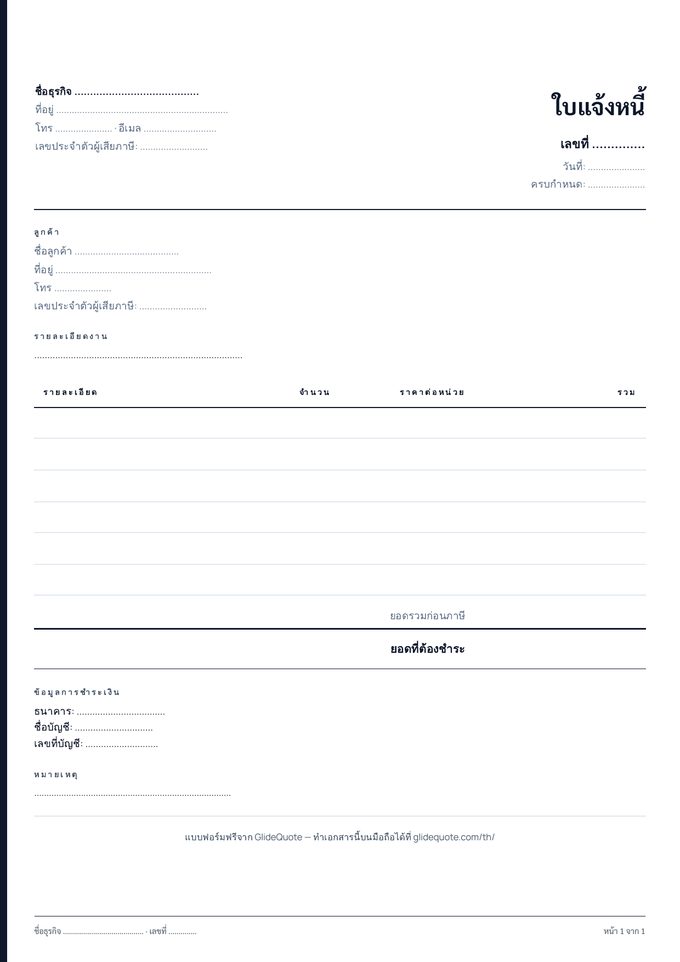 Invoice form (free PDF)A4, Thai, same design as the appAbout the invoice in Thailand →Example, what it must contain, how the app makes it
How long can I stay on a DTV?
Does the DTV allow freelance work for Thai clients?
When am I tax resident in Thailand?
Is money I earned abroad taxed when I bring it into Thailand?
Which details on my invoices matter for this?
Ready to try it?Free plan, no card · Pro is free for the first month